From A-Level to University English: Some Thoughts on Transition
Monday, October 26, 2015
I recently had the opportunity to present a session at a
Sutton Trust teachers' conference at Durham University, aimed at sharing strategies which might help students make the leap to university studies, especially those from from state schools that have lower than average rates of progression to Higher Education. My talk was particularly geared around encouraging independent study in students doing English Literature.

When planning the session I was very conscious that I could not simply talk through what HE teaching is like, and expect A-Level teachers to replicate this experience in the classroom. The A-Level curriculum, the targets and pressures that teachers are under, the diversity of the student cohorts they are dealing with, and the resources of an individual school or college make it impossible for teachers to follow what we academics might imagine to be ideal practices that would serve us with better students. Instead, I was keen simply to think through some of the pinch points and thresholds that students have to overcome as they enter university, and to reflect on these. Here is a very general summary.
Key Skills: Reading and Writing
I began the session by asking teachers what skill they thought their students required to be successful at HE English. As expected, they confirmed earlier
research comparing A-Level and HE-Level teachers' assumptions: the most important requisite skills are critical perception and affinity with literature, essay writing, and reading. Both A-Level and HE-Level teachers are evidently on the same wavelength. The problem lies with the degree to which the A-Level curriculum (including the
new format beginning in 2015) and teaching methods allow students to cultivate those skills which we widely recognise as essential.
Essay writing is a particular challenge because at A-Level the emphasis is on exams rather than coursework; students have little experience in writing longer essays expected at university level, although the new A-Level does include an
independent critical study component. Whether essays are assessed or not, though, students are still expected to do their own research about a text as part of general teaching, and to come to class having read a text or investigated key issues for themselves using the internet. Depending on the examining body, some curricula also place emphasis on information skills such as tracking and referencing research. If students face difficulties in essay writing, it may be less to do with the research side of things, and more to do with expressing their ideas in accordance with academic conventions and rhetorical structures. It's notable, for instance, that weaker university essays often present introductory paragraphs that would be appropriately cursory for an exam response, but that lack the depth and engagement with the question necessary for a 2000 word term assignment.
Those students who do an additional
Extended Project Qualification gain a great deal of valuable experience not only in research but also in writing-up research in essay form. In teaching widening participation summer schools, I certainly have noticed that those students doing an EPQ appear more confident and comfortable when we set them project or writing work, or do research tasks in the library.
In terms of reading, I was pleased to hear the teachers qualify their statements by suggesting students need to have a love of reading 'literature' rather than just reading generally. Without getting mired in arguments about literary versus genre fiction, and the appropriateness of the canon, this was a shorthand way of acknowledging that it's no good if students simply enjoy reading
Harry Potter or
The Hunger Games. At university they are going to be confronted with texts that are hard to get through, and that are intellectually stimulating but not necessarily entertaining. Students must have the perseverance to enjoy reading in general.
We might well question the extent to which the A-Level curriculum permits this type of engagement. In a marks-orientated culture, and with broad student cohorts in the non-selective sector, teachers quite naturally tend to choose texts that they think that the majority of students will enjoy and actually bother to read.
Given the choice between
The Mill on the Floss and
The Great Gatsby, it's not surprising that the latter seems to be most prevalent among the A-Level students I meet.
Lectures
I have always assumed that small-group work must be the most potentially exclusionary environment for students, because here differences between their peers' educational, familial and cultural backgrounds might be most apparent. By contrast the lecture hall - a space filled with anonymous faces and silent voices - might be expected to be a non-discriminatory environment. However, while preparing for the conference, and following discussions with the teachers, I had to question this assumption.
Lectures may in fact be the most intimidating environment for students, and one where prior educational experiences and differences are starkly exposed. Teachers below HE are expected to work in an active way, encouraging group work rather than talking at students from the board (the 20:80 rule). While this may be a positive teaching practice in the classroom, this does mean that students lack experience in listening actively for an extended period. Furthermore, in the classroom, because those moments when the teacher does talk are perceived to be especially important, students are used to taking detailed notes at these points. Consequently, when students are exposed to hour long lectures they similarly and dutifully scribble as much as possible without adopting the more detached and critical approach required, synthesising the information and looking for points in the argument which they might want to challenge. Undoubtedly, a lecture requires some high level cognitive skills that some of us (or at least myself) perhaps take for granted.
Yet is the problem less with the student and more with the form of teaching? Currently there's a lively debate as to whether lectures are actually of much value in the first place, especially in an era when students could just as easily watch a recording of a lecture on YouTube. These issues have recently come to the fore in a couple of prominent articles in the
New York Times.
For
Molly Worthen the lecture is valuable precisely because it is a space which demands attentive and sustained critical listening, of the sort that technology and social media habituates us against.
For
Annie Murphy Paul, lectures may be exclusionary, and active learning in small groups is the best way not only to achieve learning outcomes but to raise attainment across all social groups.
There is an interesting piece of new
research (cited by Paul) that suggests students from under-represented backgrounds benefit proportionately more from active teaching and structured courses, such as those where a class is set a pre-lecture quiz, given a lecture, and then given a post-lecture assessment. The traditional lecture system, where students are simply expected to have prepared any necessary groundwork (such as reading the text), assimilate the key points, and go away to investigate these further requires the student to have deeply embedded norms of learning and independence that are not cultivated in schools, which handhold students throughout.
It would be wrong to expect A-Level teachers to devise ways to prepare students for lectures, when it may be HE itself that needs to do some fundamental rethinking. Nevertheless, at elite institutions lectures seem unlikely to go away any time soon. Students who have been exposed at school to extra-curricular activities, such as external speakers who do deliver a more passive experience, will no doubt gain a valuable insight into what to expect that moment they step into the lecture theatre. If teachers can help to inculcate listening skills in students, by delivering lessons passively rather than actively from time to time, students might learn to open their ears more, and their mouths less.
Small Group Teaching
In tutorial and seminar groups, formerly confident students may struggle to contribute when faced with a class of roughly equal ability to them. Students clam up when placed on the spot and when expected to engage in dialogue with others who seem 'so much cleverer' than themselves. We felt this might be a particular problem for students from non-selective state school backgrounds who, if they are aiming for a top university, will naturally find themselves towards the top of a broad ability class. When they come to university, they are no longer the voice the teacher automatically looks to, and when confronted with others at their same level for the first time and when taught by those who do not really know them individually this can be very daunting.
A report from the English Subject Centre captures a phenomenon any HE English lecturer will recognise, and advises:
If the first-year curriculum is considered to be preparatory, then it should carry an element of preparing students for this active approach, particularly if one wishes to avoid the often reported issue of ‘the same voices contributing in each class.
Mitigating this issue requires skill on the part of the small-group; the onus is on tutors to create a supportive environment for teaching and learning. Especially in a discipline like English, we know how valuable it is if students can use classes to challenge each others' and a teacher's interpretations about a text on the fly, and to advance their own ideas orally as a stimulus for further research in a written form of an essay.
At A-Level, though, it was heartening to hear just how much thought and energy teachers put into trying to encourage everyone to contribute, mitigating the 'same voices' effect. In our discipline, teachers can try to exploit the fact that there are not necessarily 'right' answers and to encourage even their best students to recognise that, although some people may be able to express things more articulately than others, the core ideas being presented by
everyone may be valid and interesting. When the boot is suddenly on the other foot at university, and the good student suddenly feels weaker, they should be reminded that the difference is not one of 'cleverness'. This is merely their perception and not the reality of where others are at. In our subject, opinions count most, and everyone can assert theirs.
Working Capital
This was a theme that unexpectedly emerged from our reflections. Teachers pointed out how many of their students are forced to work and study at A-Level, thanks to the abolition of the Educational Maintenance Allowance. While from an academic point of view this may be problematic, it equips students with all sorts of skills in time management and motivation that students from better-off backgrounds, who do not need to work, may not possess. It also ensures students are exposed to a wider spectrum of society than those used to being just in the school and college environment.
If students from less well-off backgrounds feel put off when they meet students from more privileged backgrounds at university, perhaps we need to empower the former by reminding them of just what benefits they have gained by being forced to work to survive. This is something I see all the time at the Open University: the student who manages to study, work full time, and deal with family life possesses incredible powers of time-management and motivation that would be an asset to any employer. I'm always keen to stress that even if students get less good results because they have to fit study around work, their outcomes overall may well be stronger.
The Elephant in the Room
My session aimed to help A-Level English teachers think about how they might help their students to make the transition to HE. However, there is an enormous elephant in the room here, one which is lumbering inexorably towards us so that it cannot be ignored: we can expend lots of energy in helping students make the transition to university English - but this is wasted if none of these students want to study English in the first place.
Here is scary table number one, UCAS figures showing the number of applications to study English. Notice how this number has declined by about 5000 in 5 years since 2009, even as the total number of students entering HE has increased by 500 000.
This is bad news for English, though not as bad as the collapse facing some disciplines such as modern languages. Here is concerning figure number two, taken from a
study in the US, showing that those who study English tend to be from higher and wealthier socio-economic groups:
Why should poorer students not want to study English, which is after all perceived as a 'traditional' discipline (not like newfangled media studies and the ilk) inculcating deep and transferable skills in language and critical thinking? Witness (but don't blab about it) chart number three,
employment destinations of English graduates:
That's right, folks. Spend £27 000 to do an English degree, and you too could end up working in Pizza Express.
Leaving aside my facetiousness, and even allowing for the fact that my narrative above makes some broad sweeps over the underlying causes and effects, it's not good news if we are keen to widen participation in the subject. The previous chart is for those graduates in employment; what it does not show is that 20 percent of recent graduates are not in employment but taking further study, training or research. Doing an English degree is great preparation for numerous careers, with its broadly transferable skills - but it's not necessarily adequate preparation for one particular vocation. If students need to retrain, then it's not surprising that those who take up the discipline at HE may tend to be those who have the parental and financial resources to fall back on when they need to pursue further study.
Unless universities and academics can address the perceived irrelevance and skills gap of the non-STEM subjects, such as English, then attempts to widen participation in these fields, noble as they may be, are destined simply to chase an ever receding target.
Labels: A level, English Literature, HE level, outreach, study skills, Sutton Trust, teaching, widening participation
Teaching Notes: On the Road
Wednesday, February 18, 2015
I spent yesterday in classes with Jack Kerouac's
On the Road. It's the first time I've taught this text on its own, and I was pleasantly surprised by how easily it provokes discussions.
I think it helps that it seems to be universally liked, but that students recognise that the reasons they enjoy it (its fast pace, relentless movement, the seductive yet destructive Dean Moriarty) are also precisely the reasons the novel demands closer reading. Whilst Kerouac famously wrote the novel in three weeks, at a furious 100 words per minute (to which Truman Capote complained, "That's not writing; that's typing"), it is actually very carefully styled and a highly politicised text. We engaged with a number of passages and noted just how we need to pay attention to the language and structure in order to appreciate the subtlety of Sal's (the narrator's) criticisms of Dean Moriarty, and in turn of American culture.
In one exemplary sentence, slipped innocuously in mid-paragraph in Part 3 - blink and you'll miss it! - Sal notes that "Of course, the Hudson was gone; Dean hadn't been able to make further payments on it." That two word "of course" is significant; Sal never fully expresses his disapproval of Dean, but in momentary judgements like this we see how our narrator is developing from his first, naive and admiring view of Dean at the start of the book, to a more worldly and disillusioned awareness of his character now.
This led onto all sorts of interesting discussions about what that judgement might tell us about the American dream, and the post-war response to it. Some groups noted that despite seemingly pitching himself as a loose cannon outside of social convention, Dean in fact expresses his desire for freedom through that archetypal object of American capitalism: the car. There is an irony about escaping from society through the vehicle (literal and metaphorical) that best connotes it. As several students noted, in some ways, Dean is a victim of American capitalism not unlike Willy Loman in
Death of a Salesmen, or Jay Gatsby: he is torn between a romantic, abstract, ideal, and the attempt to attain that ideal through material goods.
This led some to speculate that the best way to frame this novel might be as a satire. Others suggested that it should be read more as a work of historical realism, albeit that it seems styled in an impressionistic rather than "objective" way. When groups have different views on the same text, you know that it's working well.
At the end of our study, we looked at the central passage where Dean's philosophy of life - his quest for "IT" - is most sustainedly described. Dean and Sal reminisce ecstatically about their earliest memories, and their childish dreams of freedom when they imagined being able to run at ninety miles an hour. Their conversation builds to a climax:
We were telling these things and both sweating. We had completely forgotten the people up front who had begun to wonder what was going on in the back seat. At one point the driver said, 'For God's sakes, you're rocking the boat back there.' Actually we were; the car was swaying as Dean and I both swayed to the rhythm and the IT of our final excited joy in talking and living to the blank traced end of all innumerable riotous angelic particulars that had been lurking in our souls all our lives.
What is "it"? A passage like this is so open that people can't help but have views. Some speculated that the beat of the extract is akin to jazz music, and that we should read the paragraph, with its excessive final sentence, as being aware of the limitations of language: trying to describe "it" in words is about as impossible (and reductionist) as trying to pin down exactly how music feels. Others rightly remembered that for Kerouac the concept of "beat" was linked to his spiritual commitment to the "beatific," which comes through strongly in that final line.
For myself, whilst acknowledging these possibilities, I initially chose the passage because I thought it embodied a kind of sexual energy. This is, surely, something of a parody of a back seat teenage fumbling: rocking the boat to that final, breathless climax. This suggestion seemed, however, to fall a bit flat - one of those moments where you worry you might have over-read something that's not there. You win some and you lose some, and the joy of On the Road is its ambiguity - but am I alone in sensing the sexual here?
Labels: American literature, On the Road, teaching, teaching notes
Faulty Faculty Towers: Coming to an English University Near You?
Monday, May 09, 2011
Reading William Deresiewicz's long discussion of the
crisis in US graduate schools, I am left feeling that this is the dystopia coming soon to the UK, with its now quasi-privatised university sector. In the US system, PhD programmes are aimed at those wanting to become university lecturers and researchers; given that gaining a PhD can take nine years, rather than the three or so it takes in the UK, the US PhD is more focused on training for the university culture, rather than providing a higher class of transferable skills for industry as it can be in the UK.
With the advent of higher tution fees in the UK, we can anticipate that in future most of those who choose to stay on in postgraduate education will be sponsored by industry or will be focused on PhDs as a vocational training option for a specific career. For the rest, those who are either wealthy enough, or foolish enough, to want to continue in a PhD for academic reasons, things look pretty bleak on the basis of the US experience Deresiewicz writes about.
The problem with US graduate programmes is that there are simply not enough decent university-level jobs to go around for increasing numbers of PhD graduates. Deresiewicz describes the job situation as a "bloodbath"; as a professor, he reckons it successful if half of his students gain academic jobs - and that's his students from Yale, no less. And even those successful ones are not entering tenured, full time, permanent posts, but are acting as casual, transient labour. As the US higher education market expanded in the late 1990s, rather than taking on full-time academic faculty:
Departments gradually shifted the teaching load to part-timers: adjuncts, postdocs, graduate students. From 1991 to 2003, the number of full-time faculty members increased by 18 percent. The number of part-timers increased by 87 percent—to almost half the entire faculty.
I have previously predicted that post-Browne that we can expect UK higher education to fracture teaching from research along the US model. A relatively small pool of faculty will focus on research, competing for whatever funds happen to be available in the public budget (with research satisfying the demands for public "impact"); some of these well-established academics will be recruited as brand names to gloss prospectuses, and may teach a couple of exotic modules. But the majority of university staff will be teaching-only, satisfying the more immediate demands of students - now consumers - of higher education. And the grunts bearing the load of basic module teaching will be the postdocs, teaching-only staff, and casual lecturers recruited in accordance with fluctuating demand. Unlike tenured academics, these are easily sacked when the income from student numbers falls.
This is why universities in the US continue to "sell" postgraduate programmes to naive ranks of graduates, even as the proportion of decent academic jobs that indicate the ultimate value of these programmes is falling:
You’d think departments would respond to the Somme-like conditions they’re sending out their newly minted PhDs to face by cutting down the size of their graduate programs. If demand drops, supply should drop to meet it. In fact, many departments are doing the opposite, the job market be damned. More important is maintaining the flow of labor to their domestic sweatshops, the pipeline of graduate students who staff discussion sections and teach introductory and service courses like freshman composition and first-year calculus. (Professors also need dissertations to direct, or how would they justify their own existence?)
It suits universities to continue to pitch the notion that a PhD will lead naturally and easily to an academic career. On their graduation day, as cohorts of postgraduates face joblessness, any alternative such as casual, teaching-only work is welcome, partly to bring in some sort of income and partly to sustain the fantasy that their shiny new PhD was, after all, worthwhile as preparation for an academic career.
Which leads onto another issue. Universities in the US justify the sweatshop conditions in which postgraduates and postdoctoral staff teach, with the word "training":
Teaching is part of the training, you hear a lot, especially when supposedly liberal academics explain why graduate-student unions are such a bad idea. They’re students, not workers! But grad students don’t teach because they have to learn how, even if the experience is indeed very valuable; they teach because departments need “bodies in the classroom,” as a professor I know once put it.
This is something that is already sadly familiar in the UK, which looks set to get worse. The UCU's campaign against
fixed-term, hourly-paid postgraduate or postdoctoral staff continually butts up against the argument that they are not really staff at all; in fact, they should welcome the opportunity to teach for a pittance, with limited employment rights (such as contracts that can be reduced in line with student numbers without invoking redundancy), because they are being "trained" for a full time academic career that allegedly awaits at some putative point in the future. Such arguments do not only come from university managers. I have heard them being made from the same tenured academics who are supervising the PhDs of students suffering under poor working conditions. Far from protesting against the system, the words "Be thankful for what you can get" are the mantra circulating on university campuses from both PhDs and academics alike.
Labels: Browne review, higher education, teaching, tuition fees, University Life
The Browne Review: Teaching and Learning
Wednesday, October 20, 2010
This is one of a series of posts in which I respond to the
Browne review of higher education funding and student finance. Other posts look at the implications of the Browne review for
postgraduates, and for the
arts and humanities.
Entering into the new higher education marketplace, a logical assumption that students might make post-Browne is that if they are paying more, they should get more in return: more and better teachers, improved IT and library facilities, green and tranquil campus spaces to rival Harvard or Princeton. Had the Browne report been presented in an era before massive cuts to public spending, this might have been the case. A tuition fee market would force universities to compete for students, and to provide higher-quality, more attractive "products" as a result.
However, Browne was instigated before spending cuts became the sole focus of political debate.
Launching the review in 2009, Business Secretary Peter Mandelson suggested its aim was to widen participation and simplify student support. By 2010, with the government's spending review imminent, Browne has become reconceptualised. No longer are tuition fees about improving higher education for all, but about making up a potential
£4 billion cut in public funding. Exemplifying this change in attitude is Steve Smith, head of Universities UK. Like many VCs of research-intensive universities, Smith had been arguing for a free market in higher education long before the recession; after it, he found in Browne a handy scapegoat.
He now argues that "Browne is not the cause of the reductions in state funding; it is an attempt to substitute other funding sources for lost government revenue."
My point in this political aside is not to be polemic (I have done polemic aplenty in my other blogs on Browne). Rather, it is to provide some context for Browne's ambitions for teaching and learning. Browne's headline vision is that:
HEIs actively compete for well informed, discerning students, on the basis of price and teaching quality, improving provision across the whole sector, within a framework that guarantees minimum standards.
In a scenario before spending cuts, improving quality would have been in the interests of universities, students, and government. In the present climate, however, tuition fee rises are necessary simply to keep universities from going backwards, since investment to improve quality will certainly not be available from government, which will distance itself from any complaints about teaching quality once resources reside with universities alone. The risk here is that universities that are already at the top of league tables will be able to sit back on their reputations, knowing that students will always want to come to the big names that are on the tips of employers' tongues: Durham, York, Exeter, UCL; they can thus use tuition fees to make up the shortfall in their income without correspondingly seeking to further improve the standard of their already good teaching. Universities lower down the pecking order, by contrast, which may begin by charging lower fees, will have to indebt themselves in order to invest in facilities and teaching that might potentially attract more students. It is not surprising that many commentators already foresee the closure of several poorer universities.
Aside from further polarising wealthy and poorer universities, what will be the consequences of tuition fee rises within the mainstream student experience? Browne says plenty about a regulatory framework - run by a new Higher Education Council - that will seek to guarantee teaching quality. However, he says little about how increased tuition fees should be spent to improve university education in practice.
One positive thing he does suggest, with which I agree, is that all university teachers should be trained and accredited to HEA standards. It is still shocking to think that it was not until the 1990s that any qualifications for university teaching even existed.
More vaguely, Browne adds that:
Institutions may want to include commitments to students on the minimum contact time with teachers that they will have and promise timely individual feedback on assignments. They may also choose to provide greater detail about class sizes or name the teachers who will be responsible for key courses.
In the annual National Student Survey, students consistently rate assessment and feedback as the lowest of all the various measures of quality. In the
2010 survey, for example, only 65% were satisfied with the quality of assessment and feedback. However, feedback and assessment are highly intensive on staff time, especially when staff are pulled in different directions, between teaching and research. If marking a batch of class papers means missing the deadline for a major research grant application, then it is the class which is going to suffer. What is likely as a more general outcome of the Browne review is that UK higher education will split along US lines: postgraduate or postdoctoral staff will perform most of the teaching duties, whilst established faculty are employed in research-only positions. Well-known professors may be parachuted in to look good on prospectuses, but in practice teaching and research will be distinct streams. This may indeed improve the timeliness of feedback and assessment, and other direct measures of teaching success, but it will be at the expense of what differentiates holistic UK universities, with their strong tradition of research-led teaching, from their US counterparts.
Also worthy of note is the following caveat:
Students may decide to include commitments on attending a minimum number of classes or completing a minimum number of assessments per term.
Whilst Browne's meaning here is somewhat ambiguous, I take this to imply that in return for being empowered to hold their universities to clearer standards and expectations, students should acknowledge their responsibility to engage with the requirements of their degree programmes. Whilst one would like to think that no student ought to need to promise to work, in practice some students do see their degrees as a way of subsidising extra-curricular life experiences. It would be hoped that students paying £7000 tuition fees would take increasing responsibility, and prioritise their academic work over their social life. However, things could turn the other way. Why should a teacher demand an essay from a student if that student, who is now a fully subscribed education consumer, does not want to submit it? Why should a student have to attend lectures, if he or she, having freely chosen to pay £7000, does not want to go? This caveat about "commitments" seems to be an attempt to force students to keep to their responsibilities to learn, even as they exploit their rights as consumers. However, even if students sign up to some sort of charter, what would be the ultimate consequences? Can one really see a university expelling a student who has failed one first year exam, and thus losing a potential £14 000 of future income? Under Browne, tuition fees will be paid directly to universities on behalf of students, rather than distributed from a national pool, whilst there will be no cap on the number of students universities are allowed to admit. This may mean that universities become unduly and detrimentally attached to a student's buying power, rather than their brain power, allowing students to resit courses for which they are unsuited when in the past they might have been dismissed from the university with their place taken by a more willing student.
Regardless of the effects of teaching and learning once students are at university, one of Browne's conclusions that I wholeheartedly endorse is the need for students to get more refined information about where their tuition fees are spent:
Most of the investment in higher education goes to institutions through a block grant and students have no sight of what it is buying. We want to put students at the heart of the system. Students are best placed to make the judgment about what they want to get from participating in higher education. ...Students will be better informed about the range of options available to them.
As I wrote in my essay on
Tuition Fees and Contact Hours, data about student spending is woefully inadequate. For example, an undergraduate in the arts will typically have half as many contact hours as an undergraduate in the sciences. However, the arts student has no way of knowing how much of their tuition fee is spent on the resources that they may make significantly more use of, such as physical libraries. This information has to be made available, to allow students to choose between different modes of study. Some students may prefer more contact time, but correspondingly more proscribed courses without, for example, dissertations; others may like independent working but need to know that the study, library and IT facilities will be made available for them to do this.
However, there is another scenario. At the leading, established university at which I teach English Literature, student contact time is limited but focused. Although students may only have four tutorials per module per year, for example, these take place in small groups of eight rather than in large seminar classes. In terms of its outcomes on student learning, an hour's intensive, small group tuition is almost certainly better than several hours of larger group teaching. Because no student can escape discussion in a group of eight, students build their confidence and oral skills, whilst also learning to criticise authority (that is, myself) and to assert their own views and ideas; they build strong relationships with me, which often conclude in me writing them an informed job reference. Our students seem to recognise this. Although well aware that the amount of contact time they receive is limited, satisfaction scores on the courses on which I teach have not markedly dipped from the era of £1000 tuition fees, up to £3000 fees today.
However, Browne proposes that students discriminate between universities on an up-front basis. In their prospectuses, universities should make clear "Weekly hours of teaching contact time." If this is not tempered by describing the type of contact time as well, one can see the hallowed "contact hour" becoming the sole indicator of return on tuition fee investment. Regardless of whether University X gives 20 hours of lectures a week, whilst University Y gives 5 hours of small group tuition, more will be seen as better. This will be exacerbated as parents become increasingly involved in supporting their children through higher education. Although a student experiences university in a subjective and flexible way - in the case of mine, they recognise that the comparatively little contact time they have still works for them, regardless of what other courses are doing - parents look at their children's education from more objective standpoints. If their son or daughter is receiving less face time with tutors than their peers, parents may start to pressure universities to put quantity of tutor contact over quality.
As with assessment and feedback, it is not hard to envision that research and teaching will be split so as to meet the demand for more contact time. Instead of prominent but busy researchers giving a few lectures over the course of a year, a single teaching-only staff member will run an entire block of lectures on a more regular basis. It may well be that on quantitative measures, this improves the student experience, but it also fundamentally changes the nature of universities in the UK, so that instead of integrating teaching and research such that each university teaches to its research strengths or according to the specialisms of its lecturers, universities deliver formalised curricula in staid and uninspiring formats.
Of course, as with all my
blogs on Browne, I may be guilty of an innate, academic conservatism. Just because successful universities have in the past been constituted in certain ways does not mean these are the right or best ways for the twenty-first century; just because I feel as a teacher that the buzz of a small group tutorial is worth more than an entire week of lectures does not mean that my students feel the same; just because students will become consumers of their education does not mean that they will automatically expect to be given easy degrees without having to commit to meet work deadlines or attend tuition. However, without being naive about the scale of the funding problem, I do believe that conservatism is the least worst standpoint when it comes to the UK's higher education sector.
The UK government has traditionally
funded higher education at around 1.3% of GDP, compared to an average across OECD countries of 1.5%; the US spends 3.0% of GDP on higher education. Despite this comparative underfunding, UK higher education punches far above its weight in international league tables. In science, the UK is second only to the US in terms of the number of citations, making it by some way the
most efficient programme in the world. Limited tuition fees have funded more university places over the last decade, and a record number of students now attend university. According to the NSS, 80% of students were satisfied with their experience in higher education. UK higher education is a flawed system - 80% satisfaction still leaves one in five unsatisfied; thousands of students miss out on university each year because of a lack of places; science is currently suffering from a "brain drain" as academics move abroad - but in spite of these flaws, it still largely works.
Changes certainly need to be made to keep it running this way. In an era before the spending review, government might feasibly have argued that increased tuition fees were necessary to allow public money to be focused on increasingly expensive research, rather than paying for student tuition, whilst a free market would allow the cap on student numbers to be lifted, preventing the spectacle of
hundreds of thousands of students missing out on the university degrees that are, so government claims, essential in a modern economy.
After the spending cuts, though, the picture looks very different. Tuition fees will simply allow UK higher education to stand still at best - and may potentially damage a system that works well if imperfectly, at worst. The risks are enormous: a huge debt burden on young people, exclusion from higher education based on social background rather than merit, the closure of poorer universities unable to invest to attract students or unable to justify high fees, the elimination of swathes of courses in the arts and humanities, the severance of the link between teaching and research, an excessive focus on contact hours rather than those methods of tuition that experienced teachers know to be best. If I have one concern that encapsulates everything I have said across my
blogs on the Browne review, it is that this risk we are taking with a functioning higher education system is not merited based on the potential rewards in an uncertain future. Will more students be able, even willing to come to university, as Browne promises? Will his reforms really widen rather than narrow access? Will they allow universities to focus their funding on research rather than teaching even as the latter becomes their primary income stream?
Whilst funding cuts changed the nature and outlook of Browne's review from one of markedly improving to simply maintaining higher education, Browne still concludes his report with an optimistic vision:
Our vision is not one of shoring up the current system. Instead we have aspired to propose reforms that will enhance the strengths of the higher education system, while enabling the widest number of students to benefit from the pleasures and opportunities of learning.
My vision is more qualified. With higher education starting from an already high platform of international esteem in research, and of teaching quality for students, it is hard to see how increased tuition fees and the slashing of public funding for higher education will help to elevate UK universities even higher. At best universities will maintain their standards whilst a generation of students takes on £30 000 plus of debt; at worst, our successful, internationally renowned university system will suffer irreversible changes and losses that no amount of future investment can make up.
Labels: Browne review, teaching, tuition fees, University Life
Back to School
Wednesday, September 01, 2010
Having taught at university level for six years now (I know, I can't believe it either), I'd like to think that I know what I'm doing. I may not give a perfect tutorial every time; I may mismark an essay now and again; but on the whole, I am in my comfort zone when I am confronted by university students.
However, as the television adverts would have you believe, teaching younger kids is a unique challenge. Only
those who can, teach students under the age of eighteen. Over the last year, my teaching credentials have been tested in this wholly different way, as I have run workshops for my university's
Gifted and Talented programme for pupils aged 11 to 16, and for its scheme to encourage talented students from underprivileged backgrounds gain entry to what is a fairly elitist institution. I found that there was indeed an appreciable difference between teaching at university and junior levels, though not in a way I expected.
Neither workshop was particularly strenuous in terms of its material, the one being a practical session on how to write a blog, and the other involving a series of fun creative writing exercises. But both left me exhilarated in a way I do not get from university teaching. Teaching university students is a great privilege: they are (on the whole) motivated, highly intelligent, articulate. The atmosphere in a good tutorial room is one that can best be described as cultured enthusiasm. Whilst students and the tutor are usually passionate about the material, and hold strong views on it, these are expressed in ways that are intellectual and refined. We use theory to support out arguments, select evidence to explain a text. Our voices never get raised in anger or pleasure. We take it in turns to talk, and listen to each other carefully. The baser emotions of passionate feeling trickle through our words which are delivered with thought and care - as they rightly should be at an academic level.
Not so at the junior writing workshops. With twenty students in the room, these were noisy, bustling affairs. The kids chattered over each other, and although no one misbehaved, conversations happily drifted off the topic I was teaching. However, they were also utterly delightful, with delight meant in the most literal sense. They made me laugh, smile, joke with them. I know a conventional university tutorial has been successful when I come out of a tutorial room with my adrenaline pumping as if I have just been on a run, chasing down mazes of eager enquiry. Even after the best tutorial, though, I've never laughed out loud at the work we have done. Yet the junior scholars were genuinely entertaining, playing my word games and writing fake blog entries with imaginative abandon, joking with each other and with me as they did so. Both workshops were for students who are at the top of their classes, and I am under no illusions that their ability and good nature would not be uniform across a failing comprehensive. Nevertheless, it is good to know that the pleasures of teaching and learning can be sustained at all levels, from the very old (I taught a lady in her nineties for the OU last year) to the very young.
Labels: teaching, University Life
60 to 0 in A Month
Tuesday, July 27, 2010
As regular readers of this blog will know, my life during university term time can get somewhat hectic. In various states of play, at any one time I can be holding down six different jobs: I teach part time at a mainstream university and at the Open University; tutor in a residential college of a university; work in a university library; write reports for a major research institute; and do a bit of publicity work for my department. With all these cards in play, during the term time my six or seven day working week can easily equate to the 60 hours of this blog title.
The price I pay for this game of life is that I don't have much of one (a life, that is) outside of work during term times. The other price is that I have been unable to keep up with my research. I have a number of projects and papers that I might be working on, not least being editing my thesis for a book proposal, since I am unlikely to get a full-time academic post without that first publication. However, these all go on hold until the Summer.
With the vacation, my formal working hours drop to less than ten a week, with even these being done from home as and when I want. This time last year, I had grand plans for what I would do with all this spare time. I started on a leisurely little paper on empathy in Ian McEwan's
Atonement, until I realised that to discuss empathy and the novel was to open a mass of existing research that I had never known existed, and that would need to be read before I could hope to do justice to my incidental ideas. Instead, I wrote a couple of book reviews. I built myself a jazzy website for my academic teaching the coming year. I filled in numerous job application forms. And then, towards September,
when I was appointed to my Open University post, I found myself busy doing all the preliminary reading and administration for this new course.
Largely, though, time dripped through this fragile web of productive work. Bike rides, sorting the garden, painting the house, reading for pleasure, sprucing up
The Pequod - all became reasons not to work as much as I might. I justified this to myself on the basis that, having only passed my PhD viva in April, I merited a bit of a break from four years of graft. And, of course, I could not possibly bear to do any more work on my thesis or put together a book proposal when I had so recently waved goodbye to my academic child. That could wait until next year.
Next year has now become this year, last Summer has morphed into this Summer. Over the past teaching year, in what time I could spare of my 60 busy hours, I hatched plans for research that I would definitely do in these comparatively lazy days, especially with regards to my thesis. The only trouble is, I can foresee this Summer passing me by again. Partly, this is due to a couple of quite traumatic and unforeseeable personal circumstances, which have already eaten into the first six weeks of the vacation by forcing me to spend it away from home. However, I can see that, now that I am back at my desk, I will struggle to get the necessary motivation to make up for this lost time. Partly, the stress of term is still relatively close, and I feel resentful of doing intensive, unpaid research now, when I know that September will bring a return to poorly paid, time-consuming teaching. Do I not deserve to live life at a more normal pace for at least these three months?
Anyone in the real world would say "yes." But I am not naive enough to believe academia to resemble the real world. I fully understand and am prepared for the fact that it is a beyond full time job that one does for the pleasure of it rather than for the money. So where has that pleasure of research that motivated me through my PhD gone to? In part, I think I lack a research plan. There are no meetings with a supervisor to aim for; I cannot afford to attend and present at more than a couple of conferences a year. Without these signposts through the year that were present in my PhD life, it is hard to find a direction through the next three months.
This leads me to something of a vicious circle, as I feel I have lost my inspiration - something critical to a literary and intuitive subject such as English. In plugging away at my PhD research, I'd often encounter interesting but tangential ideas, books, connections that were worth following through with a paper or conference presentation. By the end, writing my thesis became a comparatively tedious exercise to fill the day, whilst it was the shorter research questions that were not really related to it that became more interesting to explore.
With my current plan not featuring anything long term as another thesis or book, however, I find myself doing the reverse: I will plug away at a few journal articles, but because these are self-contained it's hard to see how they can lead me in significantly new, unexpected and exciting directions. Without the daily grind of a longer research project, then, it becomes harder to get inspired to write impulsively in response to other things that interest me. The loop is closed, because without some moment of excitement that I have discovered an unanswered question, I'm not going to be able to construct any proposals for post-doctoral research. This is where, I suppose, this blog becomes a bit of a writer's lifeline, because I can at least write in response to things in the media and cultural sphere, even if not really "research"; my recent
article on Inception, which somewhat fits with my critical interests, is an example of this kind of excuse against sustained academic endeavour.
What I need to do is that first year PhD student's trick of setting up a nice looking timetable. It may get thrown out of the window by the end of the first week - indeed, if it did not I would be disappointed: only boring research is predictable. However, it would at least place me under some sort of necessary pressure. When I reflect on how much I am able to do during the teaching year, juggling my various commitments, I realise that I am someone who thrives on a bit of stress, who needs to feel the pressure of a looming deadline (and there is no pressure like having to stand before a class on
To the Lighthouse having only read it the week before) to work to my capacity. Probably, if I were primarily a writer, I would do better in journalism, with its incessant, nick-of-time deadlines, than in academia, with its organic research agendas.
But it is the latter in which I find myself, and so I need to discover a way to respond to the 60 hours of a teaching term not by frittering it away with zero hours during a research Summer, not by reacting angrily to the amount of work I have to do during term time, but by taking the same energy and motivation that allows me to survive - even sadistically enjoy - the teaching year, into these last three months of Summer.
Labels: teaching, time management, University Life
The Open University: Impressions of Unique Students
Tuesday, June 15, 2010
Earlier this year, I blogged about my
first impressions of teaching for the Open University from an institutional point of view. Now at the end of the year, it seems appropriate to reflect on my sense of the students I have taught, again especially with a view to the differences I perceive between OU students and those at the mainstream university at which I also teach.
As I
said previously, I did not really appreciate the uniqueness of the
OU until I was inside it, and the same goes for understanding the type of students it attracts. At the risk of promoting a prospectus cliché, the diversity of the students is remarkable. My groups have included young single parents juggling childcare and work with study, and retired grandparents looking to maintain their intellectual energies. Some of my students have PhDs, whilst others have only basic school leaving qualifications. Some are studying for personal interest, others to further their careers and skills. Some of my European students want to improve their standard of English language, whilst some of my UK students living abroad want simply to keep in touch
with English.
The common theme uniting this disparate band is motivation. Not treading the conveyor belt of education from sixth form to university, all have opted to study at the expense of money and, more significantly, of time. Of course, keeping up their motivation has not always been easy. For some, the pressures of personal or work circumstances have forced them to stop in spite of their best wills; for a few others - who have prompted me to reflect on my own practices of support - their lack of self-confidence has outweighed their determination to continue in the face of a low essay mark. Whilst those who actually do not complete or opt to defer their course are in the minority, the motivational factor of those who remain builds a substantial quality of trust between tutor or student.
When someone struggles to submit an assignment because they are full-time caring for a disabled relative, this seems in contrast to my mainstream students who seem systematically to fall ill or break their printers at 2.00 in the morning on essay deadline day. Of course, one has to give these students - who are, I stress, the minority as well as the stereotype - the benefit of the doubt. But doubt is something I rarely have when an OU student contacts me to discuss their troubles. Having actively chosen to do the course, failing to meet its deadlines is unlikely to be a conscious choice, but one that must be viewed sympathetically and flexibly.
On the more positive side, I feel very involved in ensuring that their motivation to start the course sees them through an incremental learning process that may start slowly, but that has built to a really positive conclusion and high marks in most cases by the end of the academic year. This sort of trajectory is not one I have really encountered before in my mainstream teaching. Whilst my mainstream university students are intellectually exemplary - they are, indeed, among the very best in the country - their existing abilities sometimes make me suspect that my role is more to encourage, enthuse, and probe than actively to teach. The acquisition of knowledge is something that these students can do independently in a library, and although they respond thoughtfully to my feedback on their essays, it is the practice of writing regular essays itself that has the biggest influence in the immersive university culture. By contrast, OU students bring very different backgrounds and skills to bear, albeit driven by a motivation to succeed, and my greatest personal reward has been that I feel that I am actually teaching, exploiting their motivations to learn by making suggestions to which they will definitively respond. And although they, too, study independently of me, I am their only point of formal contact when they genuinely need help to understand something that they cannot work out for themselves.
Most evidently, my teaching impact is directed through their assignments, which I try to mark thoroughly (even, I heard one student say, jokingly, "tyrannically"!). Where an aspect could be improved, I say so. Where an essay is weak, I point this out. Where an essay is strong, I commend it. So many of my mainstream university essays are good but ultimately unspectacular pieces of work, such that is hard to pinpoint just what is needed for that elusive first which should, in principle, be within reach of any of my mainstream students given the top grades with which they arrive at university. By contrast, I rarely have difficulty pinpointing to my OU students what they could do better and, when they respond directly to that feedback in subsequent assignments and receive a higher mark, a virtuous circle is closed between myself and them. Looking at the average marks across my group, there has been a steady progression from the mid-50s in the first assignments, to the mid-70s by their final ones. This bears out my general sense of the comments I have found myself making on their scripts. At the start of the course, I was regularly explaining the need for coherent sentence structure and smooth integration of primary quotation with arguments; by the end, I find myself discussing the finer points of apostrophisation and pointing out how they could engage dialogically with secondary criticism.
Which brings me to their literacy skills which are, I suppose, the one area that has most surprised me, because I did not know what sorts of standards to expect. Of the mainstream university students I receive from A-level, I know to expect that they can write a good, structured essay, but may well have flawed punctuation and grammar - especially the dreaded spliced comma - because they have never been actively taught to use the language correctly. The literacy of my OU students does range more widely, but on the whole, I would say that they are not far behind my mainstream students in terms of their ability to structure a coherent argument in a syntactically rigorous way. Oddly enough, some of my students who speak English as a second language are better than many native speakers in this regard, since they have actually been taught the underlying rules from the ground up.
A further distinction between my OU students and my mainstream ones is that the former actively respond to my comments about their writing style, working hard to correct infelicities the next time around. It may take a while for the improvements to show through, but their increasing scores testify to the fact that the lessons I teach through marking are actually being learned. A similar sense (though this must be shared with the course teams who craft the written teaching materials) comes across in their development as literary critics. Often starting off by falling into the old trick of re-narrating or summarising the "story" of a literary work, by the end of the course most of my students approach assignments in an analytical frame of mind, able to decipher questions of style and form rather than plot and content.
This, however, marks the one predominant frustration of teaching for the OU. At this end of the course, as well as instilling a degree of critical competence across the board, I have some students who I know would excel at higher levels and into postgraduate study, whose baseline literary critical skills could (or should) be driven even further. However, the OU's modular system being as it necessarily is, my students who have more to give in English studies might next year find themselves studying the fundamentals of stellar mechanics.
One pleasure with my mainstream students is to inculcate them in level one courses that introduce them to the major genres, and then to take them to level two where they specialise in more niche areas. By this stage, they actively challenge my own views, and conduct their own research that, via essays, reciprocally educates me. With the OU, I hope I have helped students to realise their potential as writers and critics, but whether they choose to employ these core skills on more advanced work is, sadly, not a journey I get to make with them. This, then, is the end of the road - at least until a new intake comes to me in October.
Labels: Open University, teaching, University Life
The Open University: First Impressions of a Unique Institution
Thursday, November 12, 2009
Over the summer, I was (more by luck than skill, I suspect) appointed as an Associate Lecturer for the Open University. This is the first of two posts contrasting the OU with the more conventional university at which I have taught part-time for several years. This post gives my impressions of the OU as an institution; the second will look at the differences between OU and conventional students.I have long felt that the
Open University does things differently. When I was younger, I remember our kitchen table continually covered with papers, and colourful textbooks; DVDs and software CDs would randomly drop through the letterbox; and, in the middle of the night, the video player would suddenly start whirring, recording some OU broadcast. This was because my dad took an OU course every year, finally earning his second BSc after twelve years hard slog.
Today, I stand on the other side of the OU fence. I recently got a post as an
Associate Lecturer on one of the
OU's English Literature courses. Having seen the way the OU worms its way into the home life and domestic environments of students sitting courses, suddenly the OU has infiltrated my own kitchen table and scattered its papers on the floor of my bedroom, as I grapple with the demands of teaching a new course, and integrating myself into the rules and procedures of this organisation.
Whilst I always knew the OU was unique among universities, I never realised until now quite how remarkable an institution it is. Over 200 000 students enrol to study with the OU each year. Of these, around 20 000 students are studying an OU course outside the UK; many are ex-pats, or members of the armed forces, but many too are foreign students who welcome the opportunity to make contact with a world-recognised institution. Over two thirds of students will be working whilst studying. 15% of students come from disadvantaged communities.
Even for those not studying formally, the OU makes itself felt. Each week, there are around 50 000 downloads of
OU podcasts from iTunes. Two million people access the freely available teaching and learning materials from the
Open Learn website. Millions more watch
OU supported television programmes, such as the
BBC's Coast.
The sheer scale of the organisation is mind-boggling, and utterly unlike any other, mainstream Higher Education institution. And yet what strikes me most as an
Associate Lecturer is that at its heart lies an intimate relationship between teachers and students. The idea of an OU course is that the actual teaching is done through the carefully-prepared study materials, such as course books and audio-visual materials. The tutor is not a lecturer in the conventional sense, delivering information and setting tests. The role of a tutor is simply to be on hand to offer some pointers and clarification when a student becomes stuck, to deliver tutorials which again help to draw out some of the issues on the course, and to mark assignments with detailed feedback.
With this theoretically proscribed remit, it would be easy for the OU to offer tutor support for courses en masse. In the digital age, students could post queries on message boards, and a central team of tutors could moderate and respond to them. Largely, the student community could be self-supporting, with students offering each other advice. This does happen to a degree, with students setting up lively Facebook groups, for example. However, although the OU might be run as a purely distance learning organisation, with staff too kept at arm's length, core to student support in the OU remains the allocation of a single tutor, to one small group of students (around 20 in my case).
Students may never get to see me in person (since my students are based in Europe), but they will always know that I am at the end of an email or phone line. In that respect, the student-teacher relationship encouraged by the OU is even more intimate than in a traditional university, where a tutor might lecture to 200 students, or have dozens of small tutorial groups to supervise. Already this year I have had more "contact" with my OU students than with my students at my other, conventional university.
It is quite clear that the OU is a student-centred organisation. It has to be. Its whole raison d'etre when
founded forty years ago was to widen the availability of Higher Education to students. At the same time, though, the OU has had continually to attract students in order to sustain itself. Albeit often with generous financial support available for those who could not otherwise afford it, students have always paid fees and the OU is conscious that without students, it would cease to exist. It was, in this sense, forty years ahead of the game of tuition fees, which turned students into consumers.
As I have been
complaining recently on this blog, conventional universities have no room to provide more
contact hours or support for students who are now paying fees, because it is still the research which brings in most money. As an OU lecturer, though, I am told that I am expected to support my students based on their needs. If a student needs additional help, there is a mechanism to reimburse me, as I can request overtime payments. By contrast at my mainstream university, if any student needs more than the basic tuition, or additional pastoral care, I have to support them at my own time and expense.
On the flip side, the OU also seems genuinely to care about its Associate Lecturers, all of whom teach purely on a part time basis, often alongside other jobs. It would be easy to pass the buck of professional development on to other organisations, or expect lecturers (who may already be established academics) to fend for themselves. Instead, from the moment I received my training pack it was clear that the OU will invest and support me, in a way that sets a good example for my own relationship with students.
For example, the OU offers a
course fee waiver for Associate Lecturers, and runs a range of courses that might be relevant to teaching within and beyond the OU. Part of my salary is stipulated as professional development time, and although it is left on trust whether I will actually do any, the fact that it is highlighted as a separate payment speaks volumes. I am allocated a mentor who I can approach with the picky concerns that are not worth raising with a line manager. A sample of my essays will be double marked, and I will get to see the moderator's comments; in my other university job, by contrast, I have never been told about external examiners' reports, despite me marking half the year group for one module last year, and have had specifically to ask whether my marks had to be pushed up, down, or were just right.
But. I would not be an academic if I did not judiciously balance the positives with negatives. And although my view of the OU has been very positive thus far, and I am proud to be associated with an organisation that does so much to support those who would otherwise be disenfranchised from Higher Educations, already there are some things that gripe.
There is - what else? - that old issue of pay. The OU at least has the decency to state that I should be working for 6 hours a week, which puts to shame my other university which assumes that it takes 1 hour to prepare for a 1 hour tutorial. Joke. Even so, the 6 hours very easily vanishes. I am probably working twice that each week at the moment, because I have to learn the course for the first time, as well as to teach it. Given that students on my course should be studying for 15 hours a week...well, you do the maths. Having said that, I expect that next year, with more experience behind me, the 6 hours should become a fairer representation.
The issue which has surprised and frustrated me most, though, is the awful and incoherent IT infrastructure behind the OU enterprise. There are several different websites all doing comparable things within interfaces that all look different and un-integrated (
Open Learn, Student Home, Tutor Home,
Platform First Class, Intranet Home). The email and forum software belongs in a museum of early 1990s bulletin boards: there is no threading, 100 MB of storage, no search function, poor attachment support, an awful address book, no mobile or push email support. A project is underway to replace this old system with something that may live up to the vain name First Class. But we have had richly interactive websites and communication tools for the last decade, and given that part of the OU's remit is to drive forward educational technologies, it is shockingly behind the times with its own virtual learning environment (VLE).
Similarly, the way my tutorials work is ridiculously quirky. Because my students are scattered across Europe, we hold tutorials via a telephone conferencing system. This involves an operator phoning round each participant in turn, which occupies 5 to 10 minutes of a 45 minute tutorial; we then hold a conversation across a time-delayed, echoing line. I must not overrun my tutorials, since the international operator-assisted calling charges are significant. Neither must the calls go through to students' mobiles.
But there is another way of running conferencing cheaply and easily, with me in full control. You may have heard of it. It is called
VoIP. It would be easy for me to install software on my own PC that would allow me to conference call students, either to their phones or computers or mobiles, for nothing more than the cost of a local rate phone call. Like all large institutions, I guess the OU must be slow to turn on to new technological opportunities. But as the one at the sharp end of a rubbish and costly phone line, who could run a VoIP conference with the click of a mouse, the rigidity of the old system is frustrating and, again, surprising given the OU's remit to promote virtual and distance learning.
To be fair to the OU, it is not alone in being a Higher Education institution that struggles with the internet age. My other university uses the god-awful, snail-slow, user-unfriendly
Blackboard. However, whilst in mainstream universities such VLEs are an addendum to conventional teaching methods (lectures and tutorials), the VLE is increasingly the main face of the OU for students and, for that matter, for Associate Lecturers.
Even so, a gripe about technology should be set in the context of the fact that the OU works, and works brilliantly for a large and diverse body of students who would otherwise not have access to study. In my second blog post, I will look at how these students seem to differ from "conventional" ones who have slipped directly from college into university.
Labels: Open University, teaching, University Life, virtual learning
The Twittering Tutor
Friday, October 16, 2009
One of the pleasures of
university life is the three months in summer when students depart, and rather than having to swim against a tide of preparation and marking, one actually gets to tread water, reflecting on what has gone before, and planning new strategies. For module conveners and heads of department, such planning usually means revising reading lists, syllabi, lectures, and exam papers in the wake of a burden of student feedback forms and external examiners' reports. But not being elevated to the position of a full-time academic, in my humble role as a part-time tutor, I get to reflect more modestly on my own teaching experience, and plan subtle but perhaps more exciting changes to my own teaching methods.
Over the summer, then, one plan I have implemented has been to build myself a personal website to showcase my research and CV and, rather less vainly, to support my teaching through technologies that are not offered by the university's central virtual learning environment. For example, having moved to an online calendar, I post my free/busy information so students can check when they can meet me if they need an appointment. I also offer anonymous teaching feedback questionnaires. However, the most exciting element of the website is my new Twitter account.
Long one of the Twitterati under the not-so-pseudonymic
alibrown18, this coming academic year, I will be using another Twitter account purely in support of teaching (I will not give it out here, precisely because it is designed for my students, not the use of you, Joe Public). In this blog post, I explain my rationale behind using Twitter, and anticipate some of the problems and potential benefits as a technological aid to traditional teaching and email contact methods.
Rationale
One thing that surprises me as a teacher is how few emails I get asking intellectual-type questions, where a student is struggling to comprehend material and wants some help, or where a student is carrying out their own research for essays and would like some pointers. There are far fewer than one might have expect given that they have so little contact time with me over the year. Of course, just about once a minute I receive an email along the lines of "my printer has broken, can I have another month to write my essay?" but it is rare for a student to ask me something less practical, and more discursive. Whilst this might suggest that I am unapproachable, or that I give off the whiff of "I'm too busy doing research, now leave me alone," I would prefer to think that I give the impression to students that they are welcome to ask me any questions they would like, to discuss essays or other concerns. Why, then, do so few approach me with questions that indicate fresh engagement or problems with their course content?
One clue might lie in the style of the relatively few discursive emails that I do receive. We live in a culture in which, so we are told, students would write essays via text speak and emoticons if they could get away with it. Given this, I am always surprised that when I receive a email from a student, they are most often carefully-crafted, literate, and considered. Students are usually apologetic for having "bothered" me, even if the question being asked was worthy and interesting. Coupling this with the fact that I receive fewer dialectical emails than might be expected, my suspicion is that students are put off from asking intellectual questions for fear of sounding stupid. They do not want to seem to be asking that question that might be deemed too simple, and hence too much of a bother to a busy tutor. Thus students may get so bogged down in worrying about how they can express their question, that few of them actually do so, not being prepared to write through a careful email expressing their thoughts.
As a very different form of electronic exchange, with a 140 character limit the very nature of Twitter defies extended talk. It is, however, potentially very useful for precisely the reason that intrinsically no question or comment a student poses there can be a deep one, though it may nevertheless point towards hidden complexities and undercurrents of thought in the student's mind. The additional level of informality might encourage more hesitant, or less articulate, students to use this medium instead of email. I can at this stage imagine messages like, "Help. I really want 2 write about science in Conrad's Secret Agent. What should I read?" or "Is the passage in Pride and Prejudice on p.49 free indirect discourse?"
Naturally, such questions would require an extended, probably emailed, reply. But the important issue here is about opening a channel of communication between student and tutor, encouraging the student that the tutor is approachable and open to an exchange of ideas, thoughts, and recommendations.
A second motivation for using Twitter lies in the efficient way it can be used to share contemporary media stories, web links, or one's current reading. My thoughts on this benefit were sparked when in the middle of the last academic year I read Elaine Showalter's
article in The Guardian review, showcasing her new book,
A Jury of Her Peers: American Women Writers from Anne Bradstreet to Annie Proulx
. At the time, I was teaching an American fiction course, and it struck me as apt that Showalter had touched a nerve about the masculine bias in American literature. Almost certainly, some of my students will have picked up on the article, or on one of her radio and web features around the time. Yet most may not have done.
Using a quick, informal tweet to direct students to the article would have made clear that this was neither essential reading, nor necessarily my view on the state of American literature, but that it might be of interest nonetheless. Based on my serendipitous research experiences of
happening upon books in Oxfam or articles in the
London Review of Books that sent my writing off into new and fertile fields, I firmly believe that research in the arts is as much about luck and the unexpected discovery than the predictable approach through the established reading list. Because of its brevity, tweets containing links or recommendations have the sense of happenstance about them. For example, I could only have posted: "Article by Showalter on which women writers are important in American Lit. http://bit.ly/H9fC4" It is then up to the student to read and decide for themselves what their opinion on this new criticism is.
On that note, a more ephemeral epistemological possibility might be raised through the use of microblogging teaching aids. Literature departments have come a long way since Arnold, Leavis, Eliot and their like populated their "great tradition" with dead, white, European males. Whilst many bemoan the postmodern, postcolonial, postfeminist relativism that was - and still is - the reaction to this tradition, there is no doubt that today, English studies is in perpetual flux. The "canon," such as it is, shifts with the cultural climate and the intellectual tide. Just as Showalter's
A Literature of Their Own: British Women Novelists from Bronte to Lessing
shook up the notion of the male tradition by perceiving a female line of literary inheritance, a new work by a major critic like Showalter will get noticed, will shift the boundaries of the discipline, will break the silo of "American Literature."
Yet in spite of the undermining of the tradition, even the best lecture courses can be slow to turn with the tide, perhaps introducing one or two different books a year, and certainly not rewriting material to reflect issues currently in the news, blogosphere, or literary media. The lecture course, doing its job of teaching efficiently and reliably week by week, has its place. Indeed, arguably the key merit of literary studies is its comparative stability. By discussing a common body of the best texts of a culture or time, a literature course sends a community of readers, who become workers, thinkers, and leaders, out into the world with a common humanistic framework derived from those books. But the lecture course that is the bedrock of such an idealistic (perhaps, today, slightly naive) ambition does not necessarily impart to students the sense of their subject today as dynamic, with long-cherished authors up for critical grabs, with new authors just waiting to be explored.
Now I would not suggest that Twitter, for all of its powerful
Streisand effects on the media, is by itself capable of carrying a new culture into English studies. Nor indeed would such a revolution be a good thing. The whole beauty of posting subject news to Twitter is that its informal nature means that any links or reading suggested there will not fundamentally contradict central reading lists carefully constructed by module conveners. It will be clear that these reading lists and lectures are the core of course content. Yet any contemporary tweets may also inspire students' independent learning, encourage them to explore the less well-known books on course lists, and invest in them the sense of literary studies as a discursive game, rather than a one-way process where they suck well worn information out of eminent academics. What I would hope using Twitter will do as a teaching aid is to convey in students the sense of their subject as being alive in wider critical and lay society, so that individually students feel free to imagine new ways of approaching established texts. Additionally, if I use it to post my own reading as I prepare for teaching, this might convey the excitement of independent research in a way that could enthuse students.
Why Twitter?
Twitter is, of course, just one of many web tools that might help to support learning. Why, then, is it potentially better than any alternative platform or content sharing facility?
As I have already said, Twitter's 140 character limit is ideal for encouraging students to open communication spontaneously, rather than worrying about contacting a tutor to ask a potentially (to them) silly question. It also makes it easy for me to share links to articles or books, without feeling that I have to write a long email or blog post justifying my suggestion, and without implying that my suggestions are certainly better than those on reading lists.
Besides brevity, another benefit of Twitter is its simplicity. I can easily use a browser plugin (such as
Echofon) or my mobile phone to post links or responses to students, without having to log-in to any university email or content management system.
Further, students can also follow my Twitter feed passively. I have in the past considered using Facebook as a teaching support, because it is ubiquitous among the student community and has straightforward facilities for discussions, such as the wall and message boards; it also has an events system which could be used to remind students of deadlines or meetings. However, feedback from
my students on their tutorial questionnaires strongly suggested that students would see my use of Facebook as a breach of private walls. Firstly, students use Facebook to escape work, not to do it. Secondly, in order to create a teaching group, I would first need to befriend students and vice versa, meaning that we might be tempted to snoop on each other's profiles.
Twitter, however, requires no such exchange of personal details in order to allow a feed to be followed. Indeed, anxious students can actually "block" me from following them, whilst still being able to see me. I can also use
Twitter's API to post tweets to my static teaching website (and one would hope that existing virtual learning platforms, such as the dreaded
Blackboard, will make use of this architecture in future) so students can check there even if they are not signed-up members of Twitter. Tweets can also be followed as individual RSS feeds corresponding to a hash tag. So, for example, I can assign #drama to one module, #modernism to another, and students can follow only those feeds relevant to their subject. That Twitter is by nature a public medium also means that other students not directly taught by me can pick up on my feeds, helping to offer "parity of provision" between students taught by different tutors.
Finally, the use of the "retweet" convention would allow students to use my Twitter feed to share their own discoveries with their peers, without those students having to log on to a discussion board or compose a justificatory email. Such retweets could also be anonymised, if students fear being tagged as the class "geek," whilst they can be moderated more easily than a discussion board, if I feel the content is unsuitable or irrelevant. Indeed, such moderation, which would require me to contact the student explaining why I have not passed their suggestion on, might also draw out that the student is not engaged with the course reading in the best possible way.
The Test
Of course, all the above are hypotheses conceived in the dreamy days of the summer vacation. It may well be that students do not use Twitter to contact me with sparks of doubt or questions. It may be that few make use of my feeds on current subject news. It may also be that my university comes down on me for daring to use a technology that does not come under its official virtual learning environment, and for doing something that goes beyond the normal expectation of a tutor.
But I feel that, being early in my career, and not having the burden of a full-time academic job and associated admin and research, if I do not try these things now, I may never; or, rather, if it
does work, I will be able (quite selfishly) to promote my technological innovation as an aspect to my CV, rather than something expected of a university tutor as will increasingly be the case over the next decade. At the moment, Twitter is surfing the wave of the Web 2.0 era, the hottest new technology since, well, Facebook last year. It would seem a real missed opportunity not to test how microblogging can work as a teaching tool.
The final question, though, because it is so cutting edge, is what the test of its success can be. Despite the mass of publicity, not everyone is familiar with Twitter, and despite being tech-savvy, students might think my use of the medium is a bit alien and strange. Perhaps they will not use it just because it is not yet prominent in their consciousnesses, the way Facebook is, and I would be wrong to be deflated if uptake is slow. A key problem of testing how my Twitter posts are used is that, whilst being open so that students can follow feeds in a number of ways without having to "befriend" me, this makes it impossible to apply metrics. How do I know whether my students are following me, or just random strangers? How do I know how many students without Twitter accounts are visiting my static website and actually reading the feeds there? How do I know how many have subscribed to the RSS feeds with a reader?
Further, if students do not use it to contact me with their questions, or to share their reading with their peers, does this suggest something intrinsic to many students (that they do not really want to actively engage with their learning and the intellectual potential of their subject, but simply want to pass the course), or does it suggest that this technology too has failed to unlock their discursive sides? If a few students do actively use it to chase up my reading suggestions or to ask questions, will my efforts taken to reach these few have been worthwhile, or are those the same students who would have excelled as learners anyway?
There is, at this stage, only one thing to do. In a couple of days, I have my first meetings with my students, when I will introduce my new website, and direct them to my Twitter stream. I will, quite shamelessly, get their feedback and thoughts. And hope that I will also, in a year's time, be posting here that it has been a resounding success. Wtch this spc. x.
Labels: English Literature, teaching, twitter, University Life
Getting Feedback on Teaching Effectiveness
Tuesday, August 18, 2009
Last week, the UK's postgraduate support body,
Vitae, published a survey of distance learning and part-time doctorates. The next day in the UK, universities and the higher education press were pouring over the results from the annual
National Student Survey, extrapolating a general rule about the state of universities from every dropped percentage point. Meanwhile, as an ongoing feature of this time of the academic year, many postgraduates will be busy filling in questionnaires for their graduate schools.
It sometimes seems as if higher education is fuelled by two things: money, and survey results. But whilst entire university administration departments are dedicated to designing questionnaires, or to dissecting their results, should individual academics or postgraduate teaching assistants seek feedback on their own teaching? In this blog post, I want to share my own experience (or initial lack of it) in designing surveys to direct my own teaching. But before thinking about the methods of questionnaire design, it is worth stressing why feedback is such a vital tool for teaching, even at the early stage of an academic career in which I find myself.
If UK academics want to apply to the Higher Education Academy (HEA), the national centre for teaching excellence, to receive accreditation - often, for early-career researchers, at the
Associate level - all they need to do is to fill in a form describing their teaching activities in two "areas of activity" from a list of five. These include assessing students, planning a lesson, or providing a supportive environment in which students can learn.
Area 1, for instance, asks the applicant to:
Identify the ways in which you contribute to the design and planning of learning activities. These might include involvement in the design or redesign of curricula, courses and programmes of study and/or identifying and planning different kinds of interaction with learners in various contexts for single sessions or larger programmes.
Perhaps you have held a tutorial with a group of students, planned a seminar or even given a lecture. Surely all you need to do, then, is to state what you have taught - books you have used, for example - just as you would on a CV?
The catch comes with the subsequent sentence, a mantra that is repeated beneath all of the other areas of activity:
Please give reasons for your choice of learning content, activities and techniques and how they relate to developing the learners' understanding of the subject. Please explain how you know that your work is effective and how you try to improve it.
These repeated sentences represent the tip of the huge, foundational move that has taken place in universities over the last two decades. This is the shift towards "student-centred learning."
At first, this might seem like one of those clever-sounding but ultimately meaningless phrases so beloved of technocrats. Surely universities have always had students at their centre? But consider the case of the professor who stands in front of the blackboard in a stuffy lecture theatre, droning on for an hour about some scrawl behind him, to which he occasionally gestures with an absent hand. I am sure you have encountered this stereotype at some point in your education. In response to a lecturer like this, you might well have buried your head in your hands and your eyes in your textbooks, believing that the reason you cannot understand the material or find it so dull is not that the lecturer is bad, but rather than he is so brilliant and the material he is teaching so difficult that you will never understand it. You may even have fallen for that fallacy that the worse the teacher, the better the student you must become, because you are being forced to study independently in order to understand.
Student-centred learning attempts to send such lecturers up in a (metaphorical) puff of smoke, turning attention instead to students. Lecturers should not plan lessons in ways that they find easiest to teach; and although teaching is often most exciting when at the cutting-edge of research, they should not simply talk about their current career-defining, ultra-complex project because that interests them more than teaching the basics. Rather, lecturers should instead consider what hard knowledge and soft skills they want students to learn by the end of their degree, and think about how students might best go about learning it.
This is what lies behind the HEA's application for Associate Practitioners, with that repeated requirement that you "give reasons for your choice of learning content" and that you "explain how you know that your work is effective and how you try to improve it."
How, though, can one provide this sort of evidence? The clue lies in compulsory Area 5 of the HEA's application form:
This area is about how you use research, scholarly activity and/or professional activities to support learning. Please use this section to give examples of ways in which you draw upon discipline based and pedagogic research, scholarly activity and/or other professional activities in the support of teaching and learning.
No PhD researcher should ever uncritically accept the findings of the latest journal article. Instead, research requires one to evaluate the previous reliability of an author, or to look out for any cunning argumentative tricks or methodological errors that may compromise a paper's findings. Area 5 asks that researchers bring the same evaluative techniques to bear on teaching. How do we know our teaching is effective for students? How do we evaluate whether they are learning in ways that best suit them?
This is where the questionnaire or survey starts to become of value to individual academics, not just to institutions focused on the latest league tables. Whilst good teachers will always be able to pick up on the vibes of a classroom, and sense whether students are engaged with the material they are teaching, there is no substitute for hard evidence of teaching effectiveness, just as in research one would never reject a paper's findings purely on a hunch.
And so onto my own experience. When I started teaching tutorials in English Literature four years ago, I thought I was doing a great job. Not only did I give students preliminary reading to do, I also got them to download podcasts and audio books. Rather than sticking with dusty books, I asked them to do exercises with hypertext editions.
But whilst I may have enjoyed implementing these twenty-first-century practices, when I set about applying to the HEA in 2006, how could I know that these were actually what students wanted? How could I measure whether my teaching techniques were benefiting their learning? In large part, answering this meant designing a survey. And here, I as a literary academic found myself somewhat in the dark - and, by sharing my experiences here, I hope to enlighten others in the same position as I was three years ago.
The first thing I found is that in order to be useful, questions need to be specific. Asking students whether they enjoyed tutorials (or not) might (or might not) do something for my ego, but reveals little about how they are using tutorials for learning. Perhaps they enjoyed tutorials, for example, because I never scheduled them first thing in the morning. Perhaps they were with their friends in my group, and their memories of tutorials are conditioned more by the chatter before and after, than by what actually went on in the classroom.
Even when I later modified this question to ask whether my tutorials were useful in "developing your understanding of course material," I found this did not really help much. At my university, students receive just four one-hour tutorials per year, the rest of teaching taking the form of lectures. Therefore, in preparing for a one-off tutorial, a student will usually read their primary and secondary material carefully, thereby improving their understanding of the course material automatically. Although they may not have perceived it that way when they responded to my question, the exact form of the tutorial may have mattered less than the mere fact of its existence as a key punctuation point in the academic year. Additionally, whilst I try to allow students to do most of the talking and debate in tutorials, with me taking the role of chairperson, I know that other tutors prefer to take a more active role, disseminating ideas and information rather than merely facilitating a debate. Neither approach may be better at ensuring that the preparation for the tutorial, and the contact time itself, become sound platforms for subsequent study. If a student acknowledged that my tutorials had helped their understanding, this did not necessarily mean my way of running tutorials was the best or only way of achieving the same result.
The first recommendation with surveys, then, is to try avoid generalised questions, or to ask them as part of a suite of more detailed ones. Asking whether a student enjoyed or benefited from my tutorials told me little about my teaching. Neither did asking whether it helped their understanding, because a different approach might have been similarly beneficial. In the most recent version of the survey I issued last academic year, I still asked these questions, as they provide an opportunity for students to complain if they really have not enjoyed the tutorials, and for me to get a general sense of student perceptions of me generally (it is not necessarily the case that just because a student may offer lots of valid pointers for improvement, this means your teaching overall is poor). However, I also ask more detailed, follow-up questions. Did students feel they got more out of set tasks (mini-exercises I get them to do in pairs), or when discussing a text as a whole group? Did students use any handouts given in tutorials as a way of pursuing themes developed in the space of the hour's discussion?
I also now ask very specific questions looking ahead to teaching in subsequent years, whilst reflecting on the one just gone. For example, I ask whether students benefited from any online resources or podcasts, and if so whether they think the next generation of students would appreciate more of them. This year, I even asked whether my current students thought future ones would be happy for me to use Facebook in teaching. Their responses to these questions were clear enough to guide my teaching next year decisively. Broadly put, yes to more online resources and podcasts, but no way can I use Facebook for teaching, breaking the boundary between academic teacher and student socialite.
Another trick I have discovered with surveys is to introduce them at the start of the year rather than towards the end. This might seem counter-intuitive, and against the way surveys usually run at universities. How can students comment on a course when they have not yet completed it? However, I realised that presenting the questionnaire at the start of the year would have two benefits.
Firstly, when I hand out the questionnaires at our first meeting, it forms a sort of contract between student and teacher. By indicating that I value their pedagogic feedback and will try act upon it, this implies that I will also value any literary comments they might make in tutorials. I may be the "teacher," but that does not make me God, and giving them the opportunity to criticise my teaching also illustrates the point that my ideas about a text should not be viewed as the "right" answers. This is critical in English literature, which is a discursive rather than fact-based subject.
Secondly, one of the well-recognised problems with questionnaires is that they tend to represent polarised opinions. Either students who have hated a course use them to sound off all their grumbles, even if they do not originate with you, or students who have loved the course praise the teacher, even if it is really the selection of books or material that they have liked. In previous years, I have experienced both sides of the equation in my survey results. What can be missing is the intermediate students who have liked some aspects but not others. It is hard to make concrete changes in response either to total demolition or praise, whereas students with balanced views can be more specific about what was good or bad about your teaching.
Therefore, issuing a questionnaire at the start of the year helps to encourage comments on individual aspects of teaching that can be enhanced as the year progresses, rather than coming to light only retrospectively, in a sweeping appraisal at the end. Last year, for example, after one tutorial a student commented that the questions about a novel which I asked in preparation for that tutorial did not really align with the essay questions asked in the exam at the end of the year. A fair point, and one I could rectify straight away in later teaching.
A final move I made this year, to hone the process I had started when applying to the HEA three years ago, was to place the questionnaires online. Though the paper versions never asked a student to put their names on the top, the online environment ensures greater anonymity for students, which is crucial if they are going to offer free judgements. Additionally, I noticed with the paper versions that many respondents simply offered numerical answers (that is, rating for specific questions from 1, good, to 5, bad) rather than giving more useful, written feedback. I guess this is because they felt that they had to answer every question on the written sheet, and so simply dashed through it. In contrast, the online questionnaires often received detailed comments about just one or two aspects - perhaps in response to a particular issue with one tutorial - rather than purely quantitative ratings across the full spread of questions.
I cannot stress enough how beneficial surveys have been for my teaching. Whether it is doing the specific, simple things (such as using more podcasts or keeping well away from Facebook), confirming my intuitions about how much a group is getting from my teaching, assuaging my ego with positive comments or keeping me on my toes with negative ones, questionnaires force me continually into that position desired by the HEA, where teaching is never statically delivered from the front of a lecture hall, but part of a reciprocal process which sees the student as the key figure in learning.
Given this, I do find it odd that although my own department have been supportive in allowing me to produce my own surveys, I know other postgraduates have had different experiences, because of fears of negative criticism which might lead students, who are after all fee paying clients, to complain formally to their universities, once they realise enough of them feel the same way about poor teaching at their institution. I am also aware that, over four years, my questionnaires have evolved tortuously out of my earlier naivete. I have eventually, I hope, found a good way to ask that all-important, daring question of a student: how effective is my teaching?
[This is a slightly modified cross-post from the
Graduate Junction blog.]
Labels: Higher Education Academy, questionnaire, surveys, teaching, University Life


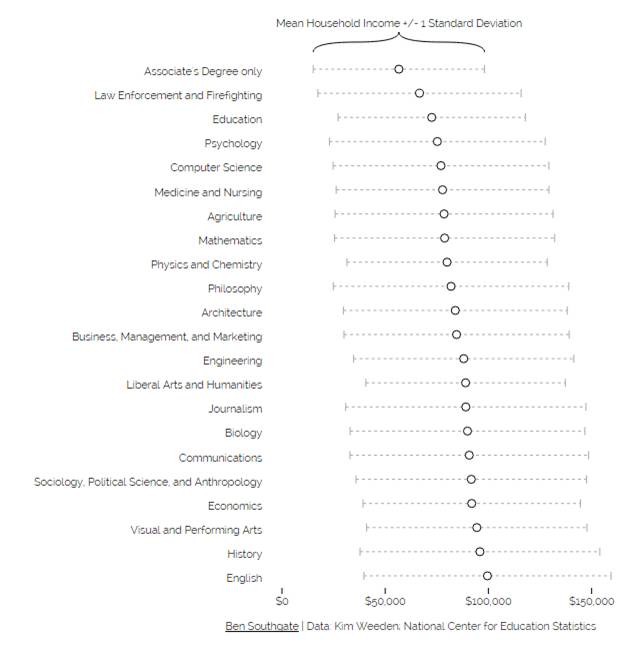


 |

